Reading and Phonics
At Hayes Primary School, we believe that reading is an essential life skill, and we are committed to enabling our children to become lifelong passionate readers.
At the heart of our intent is our drive to foster a love of reading, enriching children’s learning through carefully designed teaching activities that utilise imaginative stories, thought-provoking and richly inclusive and diverse texts.
Reading is a skill that enables children to develop their learning across the wider curriculum and lays the foundations for success in the future. We recognise the importance of taking a consistent, whole trust approach to the teaching of reading in order to close any gaps and to target the highest possible number of children attaining the expected standard or higher.
In Nursery, Reception and Key Stage 1, phonics and reading are taught through Read Write Inc. with small groups of children. Please see our phonics page for more detail.
As children complete the Read Write Inc. phonics programme, they begin whole class reading lessons and will continue this throughout KS2.
Read Write Inc.
Read Write Inc. Phonics is a highly successful literacy programme created by Ruth Miskin and published by Oxford University Press. The training and support from Ruth Miskin Training ensure the programmes have the best chance of success in schools. The programme teaches children to read accurately and fluently with good comprehension. It develops a love for reading and gives each child the best chance of success. The programme shows teachers, teaching assistants and parents step-by-step how to teach all children to become fluent readers, confident speakers and willing writers.
For information and tutorials on how to support your child learning to read go to: http://www.ruthmiskin.com/en/parents/
RWI in Practice
Children are taught phonics in homogenous groups, based on stage not age of reading. They receive a daily RWI lesson from Early Years through to Year 2. Half termly assessments are carried out to ensure children are making consistent progress and grouped according to their stage, not age, of reading to ensure that they are being challenged and supported throughout the scheme. Assessments are also used to identify children who may need extra help. In Year 1, children will undertake a national phonics screening check. If they do not pass the check in Year 1, they will undertake a recheck in Year 2.
Five key principles underpin the teaching in all Read Write Inc. sessions as taken from the Teacher Handbook:
-
Participation – As they are in small groups, children participate fully in every session. They are able to maintain high levels of concentration and they do not miss key elements of the teaching.
-
Praise - Children work together as partners. They take turns to teach and praise each other. They are motivated by praise from their teachers and teaching assistants.
-
Pace - Sessions never drag. The lively pace keeps every child fully engaged and on task.
-
Purpose - Every teacher has been trained in Read Write Inc. methods. They know the purpose of each activity, and how it leads into the next.
-
Passion - Teachers, too, become passionate about their teaching as they see the children enjoying the progress they are making.
Sounds
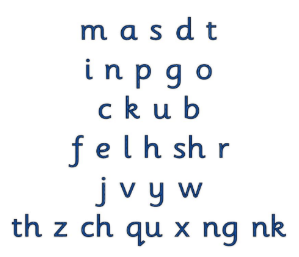
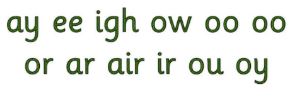
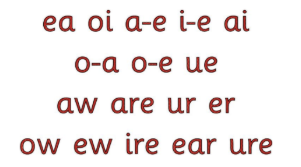
Through the Read, Write Inc programme, children are taught to recognise sounds and then to ‘sound-blend’ them into words for reading.
Please click on the following link to see the pronunciation of pure sounds https://www.youtube.com/watch?v=UCI2mu7URBc
Set 1 Sounds
Set 2 Sounds
Set 3 Sounds
Whole Class Reading Lessons
Once the children have completed the Read Write Inc. Phonics programme, they are taught reading through daily whole-class reading lessons. Lessons build progressively across a week and focus on one text for the week. Teachers ensure that children develop a good understanding of the key vocabulary and themes within the text at the beginning of the week. They then move on to teach a range of comprehension skills such as inference and retrieval through a variety of activities across the week.
When children move off the RWI phonics scheme, they move onto reading books from the KS2 Reading scheme which offers a range of genres. The children choose which books they would like to read from an appropriate level and are monitored closely by teachers to ensure they are reading books that are appropriate to their stage of reading.