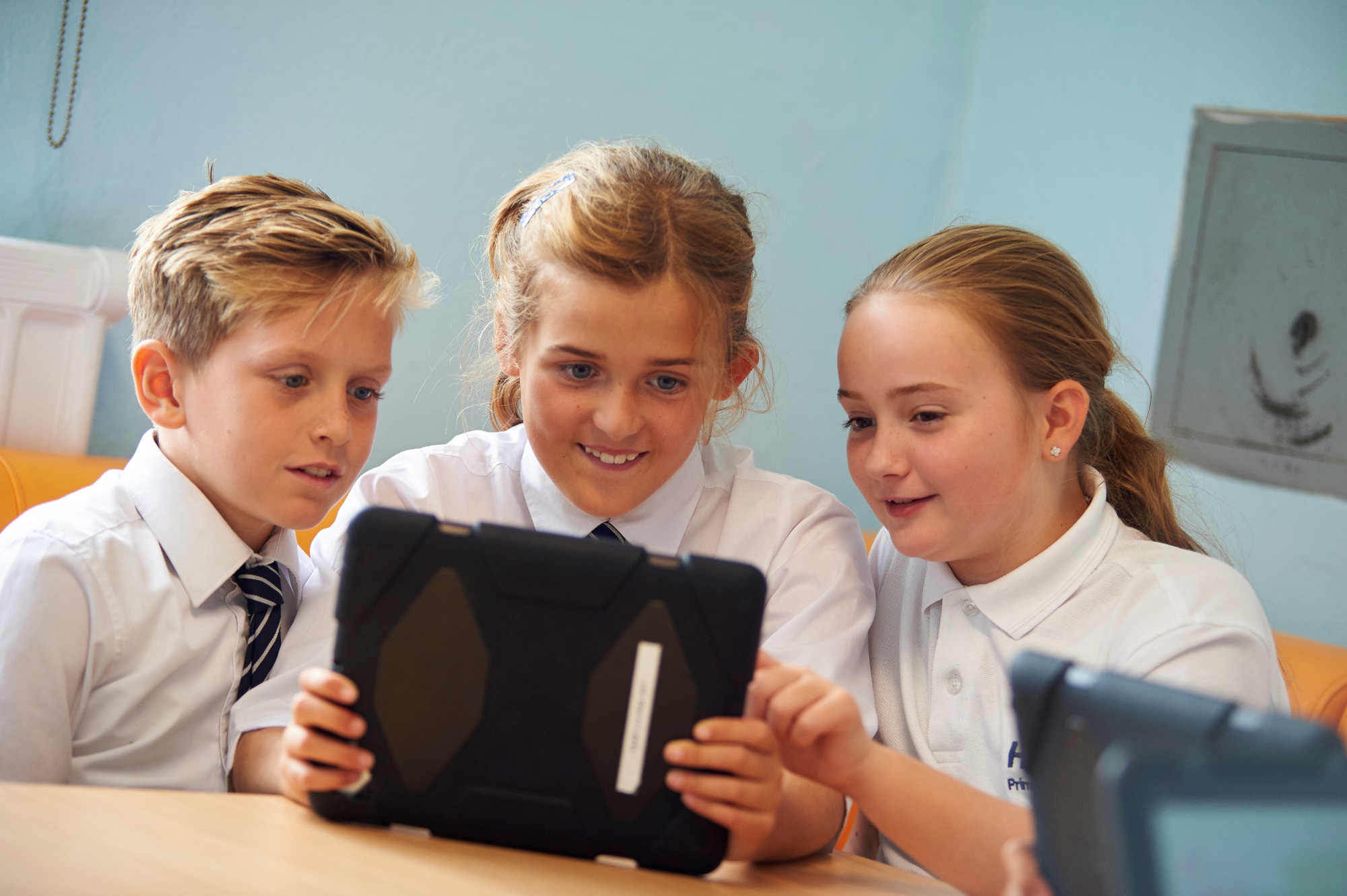
Interventions are small group or one-to-one activities that are set up to address a specific area of difficulty that a child is experiencing.
The class teacher oversees the progress and development of the child no matter who is leading the intervention. Each intervention has a distinct purpose and works towards very specific targets or outcomes. The following are examples of some of the interventions that take place in our school:
Please click on one of the interventions below to see more details:
Social Skills
Good social skills enable us to know what to say, how to make good choices, and how to behave in diverse situations. The extent to which children possess good social skills can influence their academic performance, behaviour, social and family relationships.
There are 7 areas that are commonly worked on:
- Basic non-verbal skills, eg facial expression, gestures, posture, eye contact
- Non-verbal responses, eg social distance, fidgeting, appropriate smiling & laughter
- Voice quality, eg tone & pitch, volume, speed, clarity
- Quality of speech, eg amount spoken, hesitations & pauses, speed of response
- Content of speech, eg repetitions, interruptions, interest content, relevancy of contributions
- Listening skills, eg personal experiences related appropriately, relevance of feedback to others, ability to acknowledge, summarise & reflect on what others have said
- Basic conversation skills, eg length of reply to questions, content of information given, initiating conversation
Speaking and Listening Skills
This intervention supports children in developing spoken communication skills that they may not automatically have. There are many behaviours and skills that may be covered, but they could include:
Speaking
- To be respectful of others
- To be purposeful and clear
- To use appropriate vocabulary
- To use body language well
- To speak with confidence and fluency
Listening
- To show respect and focus on the speaker
- To be able to pick out the main points
- To know when and how to interrupt
- To make supportive comments
- To be able to reflect on what was said
Verbal reasoning may also be covered. This refers to the child’s ability to move away from the concrete to more abstract thought. For example, a child may be able to respond to questions such as ‘Who?’, ‘What?’, ‘Where?’ but struggle with ‘Why?’ ‘When?’, ‘How?’
Memory Skills
The types of skills that are generally included in interventions to support memory development are auditory memory and visual sequencing.
Auditory memory often needs a lot of input, especially for those children who have difficulty understanding, in order to be able to carry out an instruction accurately.
Visual sequencing refers to the ability to think sequentially and this area of support develops this skill through activities that require them to sequence related actions into logical steps using picture materials. Time concepts, tenses and reasoning can also be developed through this type of support.
Fine motor skills support
This support aims to develop manual dexterity through activities such as using scissors, manipulation of materials and the correct grip for using pencils, pens, paint brushes, etc.
Handwriting support
Additional support sessions are offered to develop the fine motor and perceptual skills needed for effective handwriting. The skills needed for the process of handwriting are not always developed spontaneously but require specific explanation, demonstration, experimentation and practice. Additional practise helps to develop the intrinsic muscles of a child’s hands so that they then have the control necessary for letter formation, etc. It also seeks to develop the perceptual skills needed for letter orientation and page organisation.
Speech & Language (S&L)
Intervention groups are led by our Speech & Language specialist Teaching Assistants who deliver speech and Language sessions following the targets and suggested activities set by our S&L Therapist, Vicki Maher. Vicki works in the school for one day every fortnight and assesses children individually so that targetted support can be put in place.
We run groups with different focusses and these include:
- Oral to written narrative
- Conversational skills
- Visual and auditory memory
- Lego therapy
- Support for speech sounds
- Word Aware
- Colourful semantics.
Number Box/Power of Two
Basic number concepts and key vocabulary are practised using a multisensory approach, including fractions, time, measurement, money and shape. Whilst the sessions are led by a Teaching Assistant, the class teacher directs the areas that should be focused on, guided by their ongoing assessment in class lessons.
One of the main keys to these interventions is that they are used for short periods of time, typically 5–10 minutes, but often – preferably daily when the child is struggling with learning a particular area or skill.
Sensory circuits
Talk Boost
Butterfly class
Butterfly class is a nurture style provision run by our qualified, nurture practioner. Children attend small group weekly sessions with an emphasis on feeling safe and having a strong sense of belonging and on building secure relationships. Sessions last just over an hour and focus on listening skills, building emotional resilience, understanding emotions and how they make our bodies feel, taking turns, negotiating and developing play and friendship skills.
https://www.nurtureuk.org/the-six-principles-of-nurture/
This is a multi-sensory programme of teaching, designed for use by Teaching Assistants, that teaches and reinforces basic literacy skills. Each child is given as much time as they need to master each skill which are separated into different areas so that they can make progress in one area whilst moving at a slower pace in another as appropriate. Areas covered include phonics and sight vocabulary of irregular key words.
One of the main keys to the Five Minute Box is that it is used for short periods of time but often – preferably daily when the child is struggling with learning a particular area or skill.
The Five Minute Box can be used with children of Reception age to the older end of Key Stage 2.
IDL
International Dyslexia Learning (IDL) is a specialised, multisensory computer programme designed to support students with literacy/numeracy difficulties. It focusses on improving literacy (reading/spelling) and numeracy skills and is designed to be engaging, with a focus on increasing student confidence, in addition to academic improvements. Typically, students access the sessions several times a week and can also log on at home.